Modern enterprise AI rests on layers nobody built alone: computation, networks, real-time control, interfaces, security, sensing, standards and feedback.
AI Innovative did not invent, fund, descend from or participate in these historical systems. We study them because the same lessons about interfaces, standards, feedback, fault tolerance, trust and human control still govern the enterprise systems being built now.
The Relay
Follow the system, not the hero.
Choose a station to trace one layer of the system. Then filter by provenance to see where credit is clear, collaborative, institutional, contested or independently reinvented.
Historical lens → modern architecture
DataIdentityInterfacesGovernance
The same structural questions reappear in Salesforce, integration, automation and governed AI.
Provenance
Data & computationStation 01 of 08 · Data & computation · 5 stories
Data & computation1890
Prior art / precursor
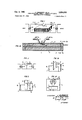
EVIDENCE / PATENT
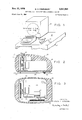
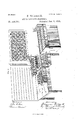
Herman Hollerith, Art of Compiling Statistics, U.S. Patent 395,781, drawing sheet 1.
U.S. patent drawing; pre-deploy rights record required.
Hollerith’s electromechanical punch-card tabulators accelerated US Census processing and helped establish machine-readable enterprise data processing.
Systems readingA data system changes when the processing bottleneck becomes tractable.
Provenance & source note
Clear lineage for tabulation, with Jacquard punch-card machinery as important prior art.
Research sources: US Census Bureau; Smithsonian National Museum of American History. Individual publication links and image rights remain subject to the pre-publication evidence check.
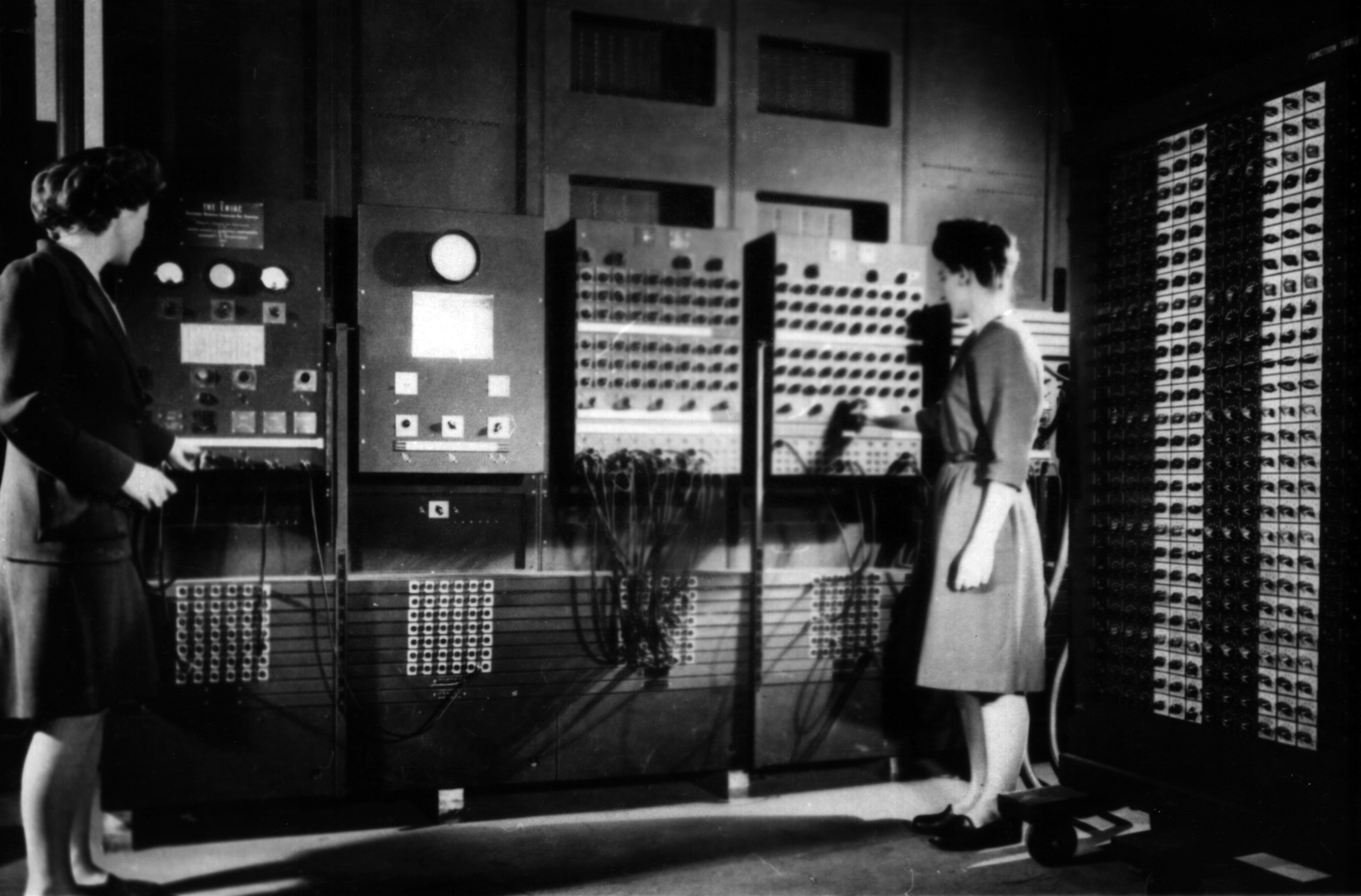
Kay McNulty, Jean Bartik, Betty Holberton, Betty Spence, Marlyn Meltzer and Ruth Teitelbaum translated mathematical procedures into ENIAC’s physical programming configuration.
Systems readingThe people who convert abstract logic into an operating system are part of the engineering core.
Provenance & source note
Institutional contribution that went publicly under-credited for decades.
Research sources: University of Pennsylvania Archives; Computer History Museum. Individual publication links and image rights remain subject to the pre-publication evidence check.
John Bardeen, Walter Brattain and William Shockley’s work at Bell Labs produced the first working transistor and accelerated solid-state electronics.
Systems readingHigher-order architecture depends on dependable lower-level components.
Provenance & source note
Collaborative breakthrough with documented internal credit disputes and earlier field-effect patents.
Research sources: Computer History Museum; IEEE/ETHW; Nobel Foundation. Individual publication links and image rights remain subject to the pre-publication evidence check.
Hopper’s A-0 work helped demonstrate practical compilation: translating higher-level instructions into machine execution.
Systems readingAbstraction expands who can use a system without exposing every implementation detail.
Provenance & source note
Clear lineage for early compiler work; COBOL itself was a committee effort.
Research sources: Computer History Museum; US Navy historical sources. Individual publication links and image rights remain subject to the pre-publication evidence check.
Ted Hoff, Stan Mazor, Federico Faggin and Masatoshi Shima combined architectural, silicon and firmware work to produce the Intel 4004 commercial microprocessor.
Systems readingIntegration changes economics when several specialised functions collapse into a reusable platform layer.
Provenance & source note
Collaborative and cross-border development, including the Japanese Busicom programme.
Research sources: National Inventors Hall of Fame; Computer History Museum. Individual publication links and image rights remain subject to the pre-publication evidence check.
Shannon’s information theory formalised information, entropy, noise and channel capacity, building on earlier Bell Labs work by Nyquist and Hartley.
Systems readingA rigorous model of signal and noise can unify many separate engineering decisions.
Provenance & source note
Clear lineage with named theoretical precursors.
Research sources: Bell System Technical Journal; Nokia Bell Labs history. Individual publication links and image rights remain subject to the pre-publication evidence check.
Vint Cerf and Bob Kahn designed TCP/IP for internetworking, while Donald Davies in the UK and Louis Pouzin in France supplied important packet-switching and datagram precedents.
Systems readingIndependent systems scale when they agree on interfaces rather than ownership.
Provenance & source note
Collaborative and contested credit; international precursors are part of the story, not a footnote.
Research sources: National Inventors Hall of Fame; NPL history; IEEE/ETHW. Individual publication links and image rights remain subject to the pre-publication evidence check.
Make state visible while events are still happening.
Whirlwind / SAGE teams
MIT and US Air Force work on Whirlwind and SAGE advanced real-time computing, interactive displays and large-scale operational coordination.
Systems readingOperational systems need current state, not just periodic reports.
Provenance & source note
Institutional programme spanning research, defence procurement and industrial contractors.
Research sources: MIT Lincoln Laboratory history; Computer History Museum. Individual publication links and image rights remain subject to the pre-publication evidence check.
Hamilton led Apollo flight-software work within MIT’s Instrumentation Laboratory, including priority and recovery behaviour that helped the system continue critical work under load.
Systems readingGraceful degradation is designed before the incident, not during it.
Provenance & source note
Team and institutional achievement; hardware, software, NASA and contractors all mattered.
Research sources: NASA; MIT News; Smithsonian. Individual publication links and image rights remain subject to the pre-publication evidence check.
Engelbart’s team demonstrated the mouse, hypertext, shared editing and networked collaboration as parts of one interactive working environment.
Systems readingHuman control and shared context are architecture layers, not cosmetic UI.
Provenance & source note
Team effort with earlier interaction-device and hypertext precedents.
Research sources: SRI International; Smithsonian Lemelson Center. Individual publication links and image rights remain subject to the pre-publication evidence check.
Hold: no suitable unrestricted primary image approved yet.
A breakthrough still needs a route to adoption.
Xerox PARC and the Alto
PARC combined graphical interaction, a mouse, windows, networking and personal-computing ideas in the Alto; later commercial systems carried many of those ideas to mass markets.
Systems readingResearch value and commercial capture are different system problems.
Provenance & source note
Collaborative synthesis, with important earlier work at MIT and SRI and later commercialisation elsewhere.
Research sources: Computer History Museum; Xerox PARC histories. Individual publication links and image rights remain subject to the pre-publication evidence check.
Whitfield Diffie and Martin Hellman published practical public-key cryptography in open research, independently rediscovering concepts developed earlier in secret at GCHQ.
Systems readingTrust can be designed into the protocol instead of relying on a private channel.
Provenance & source note
Independent reinvention with earlier classified UK work by Ellis, Cocks and Williamson.
Research sources: IEEE Transactions on Information Theory; Stanford; GCHQ history. Individual publication links and image rights remain subject to the pre-publication evidence check.
Candidate: Navigation Technology Satellite II (Timation IV), first operational NAVSTAR GPS satellite, c.1977.
NRL states this photograph is public domain and cleared for release; credit U.S. Naval Research Laboratory. Automated fetch of the local asset failed (media.defense.gov returned 403/Access Denied on this build's network); local asset acquisition still pending.
GPS emerged from several US programmes and contributors, including satellite timing and ranging work associated with Roger Easton, Ivan Getting and Bradford Parkinson; precise Earth modelling, including Gladys West’s geodesy work, supported accurate positioning.
Systems readingInfrastructure often appears only when separately developed sensing, timing and reference layers are fused.
Provenance & source note
Contested, multi-programme credit; no single “inventor of GPS” claim is used here.
Research sources: US Naval Research Laboratory; US Air Force; National Inventors Hall of Fame. Individual publication links and image rights remain subject to the pre-publication evidence check.
The US measurement and standards institution helps create common technical references for interoperable products and services, within a wider international standards system.
Systems readingNeutral standards reduce fragmentation across independently built systems.
Provenance & source note
Institutional achievement coordinated with international metrology and standards bodies.
Research sources: NIST official history. Individual publication links and image rights remain subject to the pre-publication evidence check.
Whitfield’s laminar-flow cleanroom design at Sandia dramatically reduced contamination, supporting higher-yield semiconductor and other precision manufacturing.
Systems readingReliability can depend as much on the execution environment as on the core process.
Provenance & source note
Clear engineering lineage within a US national-laboratory setting.
Research sources: Sandia National Laboratories; National Inventors Hall of Fame. Individual publication links and image rights remain subject to the pre-publication evidence check.
Candidate: Mead-Conway VLSI design/course artifact or chip-layout evidence.
Hold: no suitable unrestricted primary image approved yet.
Separate design from fabrication.
Carver Mead & Lynn Conway
Mead and Conway’s VLSI design methodology helped make complex chip design teachable and separable from fabrication, contributing to a more modular semiconductor ecosystem.
Systems readingStable abstractions let specialist layers evolve independently.
Provenance & source note
Collaborative work; Conway’s contribution was under-recognised for decades.
Research sources: Computer History Museum; IEEE; Caltech. Individual publication links and image rights remain subject to the pre-publication evidence check.
Cybernetics formalised feedback and control across machines and biological systems, drawing on wartime control work and collaboration with Arturo Rosenblueth and Julian Bigelow.
Systems readingAutonomy without feedback is just unattended execution.
Provenance & source note
Clear theoretical lineage with collaborative antecedents.
Research sources: MIT Press; MIT archives. Individual publication links and image rights remain subject to the pre-publication evidence check.
Hold: no suitable unrestricted primary image approved yet.
Naming a field can organise a future, while amplifying its hype.
Dartmouth Summer Research Project on AI
The Dartmouth workshop organised by John McCarthy, Marvin Minsky, Claude Shannon and Nathaniel Rochester helped establish “artificial intelligence” as a research field.
Systems readingA shared framing can concentrate investment and talent, but ambitious forecasts still need engineering evidence.
Provenance & source note
Institutional and collaborative; Alan Turing’s earlier work is a major intellectual precursor.
Research sources: Dartmouth; original 1955 proposal republished in AI Magazine. Individual publication links and image rights remain subject to the pre-publication evidence check.
A Salesforce data model, an AI rollout or an autonomous workflow still depends on state, identity, interfaces, permissions, observability, standards and human judgement. The technology changes. The architectural questions recur.
DATA
Can the system trust its state?
Context, ownership, quality and lineage before intelligence.
IDENTITY
Who may act, and as whom?
Permissions, delegation and boundaries before autonomy.
INTERFACES
Can independent parts cooperate?
Contracts, APIs and protocols instead of brittle coupling.

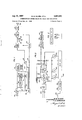
 EVIDENCE / PATENT